Our graphene far-infrared panels are engineered for fast heat-up, stable surface temperature and uniform radiant heat distribution. Wavelength, EMF and electrical safety documentation available by model for qualified buyers.
Graphene far infrared heating uses graphene-based conductive layers to convert electrical energy into radiant heat from a panel surface, instead of relying only on hot air circulation.
For sauna cabins and wellness equipment, the goal is to build a stable radiant heating system around panel layout, watt density, control matching, insulation, and installation space. Our graphene heating panels are designed to support the 6–14 μm far-infrared range under rated operating conditions; model-specific documentation can be discussed during technical review.
This makes the technology suitable for OEM sauna cabins, custom infrared rooms, heating-panel replacement projects, and distributors that need a factory-direct heating core with configurable size, voltage, power, and mounting format.
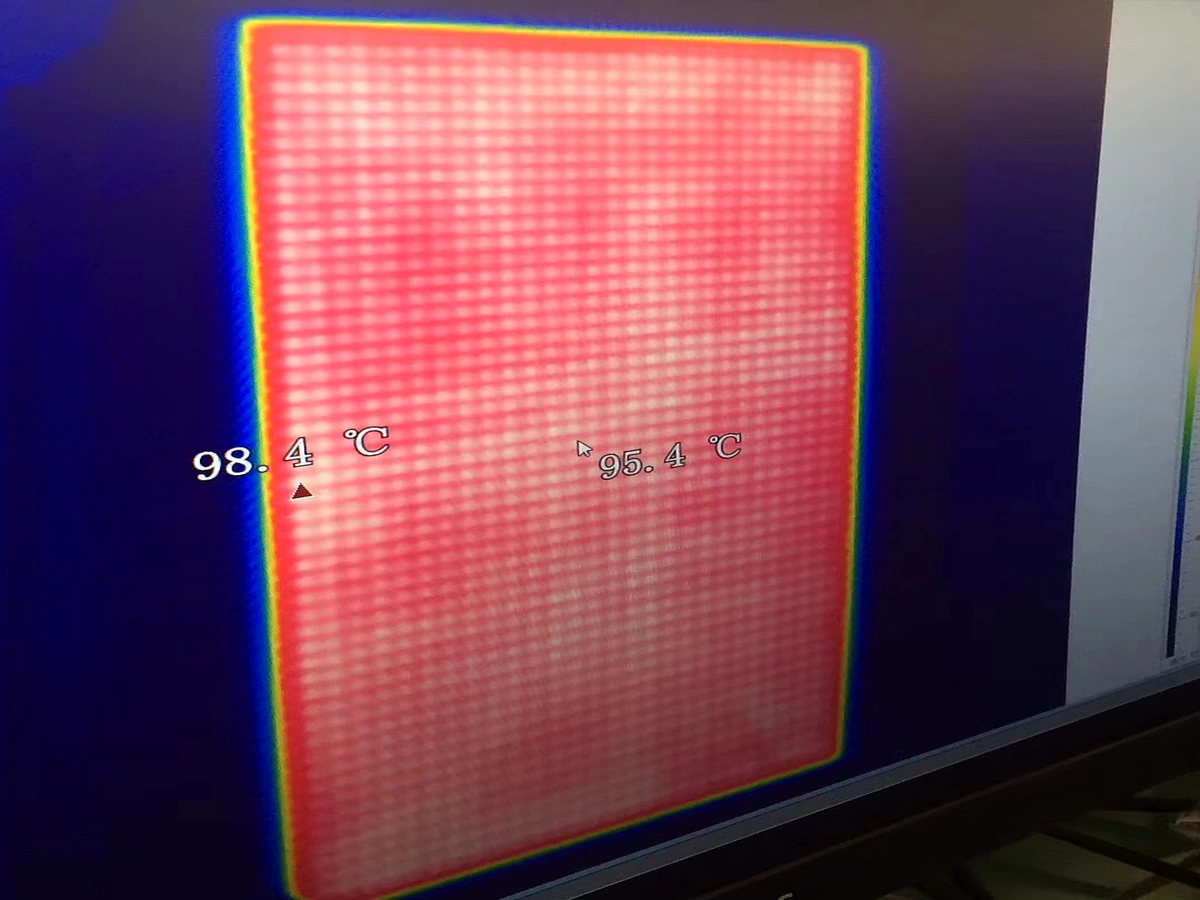
A practical explanation for B2B buyers evaluating graphene far-infrared sauna heating systems.
Far-infrared (FIR) radiation in the 6–14 μm wavelength range sits within the thermal infrared band — the region of the electromagnetic spectrum where warm objects naturally radiate heat.
Unlike conventional resistance wire heaters that primarily heat the surrounding air, far-infrared panels transfer heat predominantly through radiation. The emitted FIR energy is absorbed by surfaces in the sauna cabin — walls, benches, and interior surfaces — producing a warming effect that is direct, even, and less dependent on air circulation patterns.
Graphene-based heating panels are designed to support far-infrared radiant heating in the 6–14 μm range under rated operating conditions. This is a physical emission characteristic, not a medical or therapeutic claim. Buyers who require exact spectral data for product development or regulatory submissions should confirm documentation through test reports or project-specific technical review.
| Heater Type | Primary Heat Transfer | Radiant Characteristic |
|---|---|---|
| Graphene FIR panel | Radiation (far-infrared) | Designed for 6–14 μm range at moderate surface temperature |
| Carbon fibre | Radiation + some convection | Characteristics vary by fibre density and product design |
| Ceramic element | Convection + radiation | Characteristics vary by element construction and operating temperature |
EMF performance depends on the actual model, wattage, voltage, installation distance, and measurement protocol.
Graphene heating layers distribute current across a continuous conductive plane. This can help reduce localized field concentrations when the layout is properly engineered. The flat construction also supports review of shielding or grounding requirements where required by destination-market standards.
Buyers evaluating heating panel EMF performance should discuss measurement data for the specific panel model, wattage, voltage, measurement distance, instrument, and standard followed during the RFQ stage.
Graphene vs. conventional sauna heating technologies — design considerations for B2B buyers.
| Specification | Graphene Heating Panel | Carbon Fibre | Ceramic |
|---|---|---|---|
| Thermal Response | Designed for fast surface response | Varies by fibre layout and watt density | Varies by element construction |
| EMF Review | Requires model-specific measurement and installation review | Depends on mat construction and wiring layout | Depends on element spacing and housing design |
| Heat Distribution | Planar surface design supports broad heat distribution | Depends on fibre density and mat coverage | Depends on element geometry and airflow |
| Efficiency | High electric-to-heat conversion under rated conditions | Varies by product design | Varies by operating temperature and housing |
| Service Life | Depends on model, installation, and operating conditions | Depends on material quality and application | Depends on element construction and use case |
| IR Wavelength | Designed for 6–14 μm FIR range under rated conditions | Characteristics vary by product design | Characteristics vary by element construction |
Request specification sheets and a project quotation based on your target model, destination market, and technical requirements.
Dive deeper into graphene heating technology and sauna applications
Technical guide on heater layout, controller design, and what to evaluate before choosing a graphene heating solution.
Compare heat uniformity, response speed, FIR performance, durability, and customization for sauna and OEM buyers.
Explore our higher-performance heating module designed for sauna rooms and OEM integration projects.