Graphene vs Carbon Heating Film for Saunas: Key Differences
Quick Answer for OEM Buyers
Graphene heating film and carbon heating film are both resistive heating materials, but the material label alone does not tell a buyer which one fits a project. The useful comparison is based on the exact construction, target voltage, watt density, panel or floor assembly, control system, test conditions, documentation requirements, and total quoted configuration.
For an OEM buyer, neither category should be selected from a generic claim about speed, efficiency, or price. Ask both suppliers to quote the same specification and provide comparable documentation. Then evaluate the finished heating assembly under the conditions in which it will actually operate.
Graphene Heating Film vs Carbon Heating Film: What Is Actually Different?
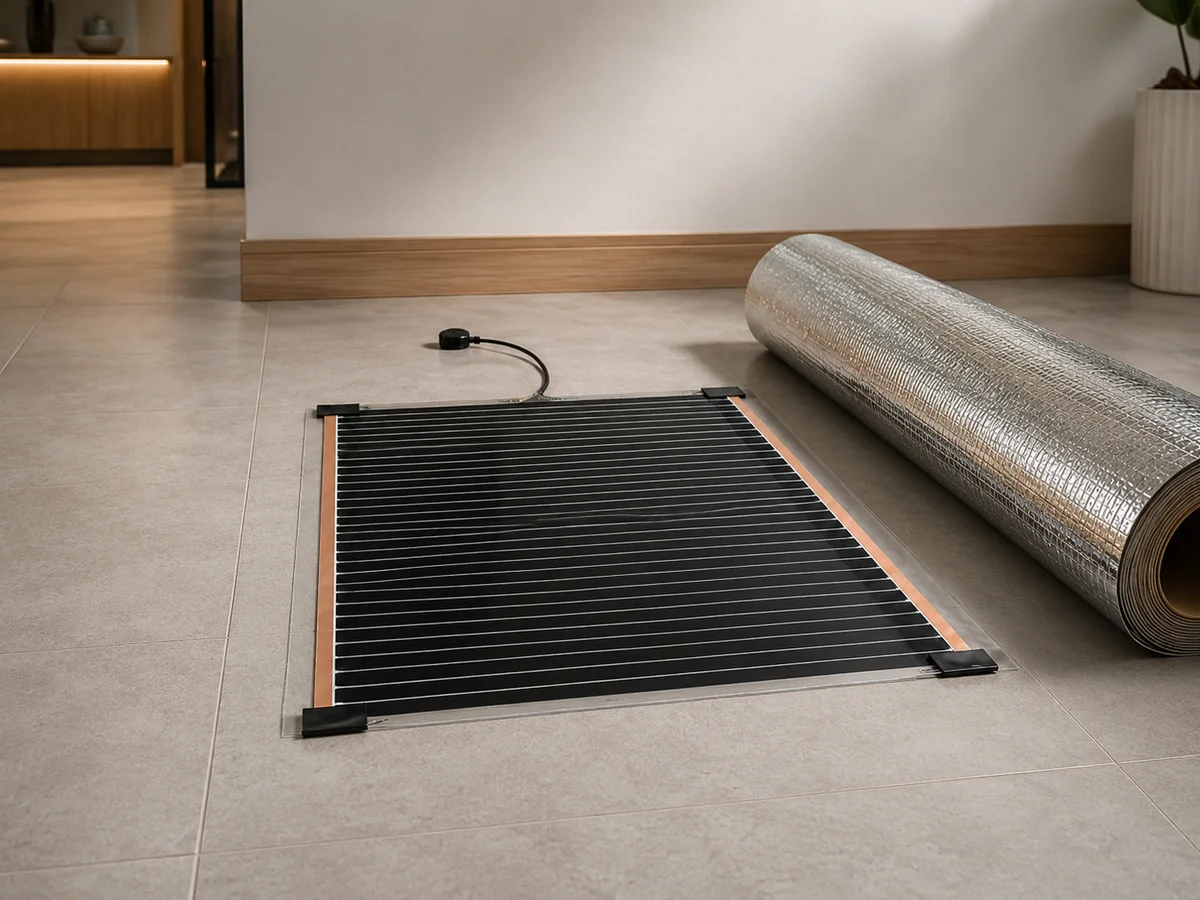
Graphene heating film uses a graphene-based conductive layer. Carbon heating film is a broader category that may use carbon-based ink, powder, crystal, fiber, or another conductive formulation. In both cases, electrical resistance generates heat when the film is energized.
The practical difference is not proven by the product name. Two films sold under the same category can behave differently because of their conductive formulation, electrode design, substrate, insulation, lamination, watt density, controller, and installation structure. Buyers should compare the exact product configuration rather than treating every graphene film or every carbon film as identical.
| Buyer Decision | What to Compare | Evidence to Request |
|---|---|---|
| Material identity | Conductive layer and overall layer construction | Product-specific material description or technical data |
| Heat behavior | Surface temperature distribution and response under the same assembly and test conditions | Comparable thermal images or a documented test method |
| Electrical fit | Voltage, watt density, dimensions, electrode layout, cable exit, and controller compatibility | Specification sheet for the quoted configuration |
| FIR positioning | Whether a far-infrared claim is relevant to the intended product and operating conditions | Documentation for the exact product and rated conditions |
| Market access | Requirements of the destination country and finished product | Applicable documents confirmed for the exact SKU or project |
| Commercial fit | Tooling, customization, order quantity, packaging, lead time, and delivered cost | A matched RFQ rather than an unmatched unit-price comparison |
How Should Buyers Compare Cost?
A search for “graphene heating film cost” often produces prices that cannot be compared directly. One quote may refer to raw film, another to a laminated heating element, and another to a finished module with wiring, insulation, connectors, and packaging.
To compare cost properly, send suppliers the same RFQ and separate the following items:
- Heating element scope: raw film, laminated element, assembled panel, or finished heating module.
- Electrical specification: target voltage, watt density, controller requirements, wiring, and connector position.
- Physical specification: dimensions, shape, mounting method, insulation stack, and allowable tolerances.
- Validation scope: required drawings, thermal review, electrical checks, or other project documentation.
- Commercial scope: tooling, packaging, order quantity, production terms, freight basis, and destination market.
Only after these items are aligned does the quoted price become useful. A lower film price can result in a higher finished-system cost if the buyer must add lamination, wiring, insulation, testing, or rework elsewhere.
Which Film Is Better for Sauna and Heating Panel Projects?
For sauna cabins and radiant heating panels, the buyer is purchasing a heating system, not merely a conductive material. The film must work with the panel structure, insulation, mounting space, electrical design, controller, and cabin layout.
A graphene-based film may be appropriate when the product specification and brand positioning require a graphene heating layer or a documented far-infrared design context. A carbon-based film may also be suitable when its exact configuration meets the project’s thermal, electrical, documentation, and commercial requirements. The correct conclusion must come from a matched project review, not a category-wide promise.
For buyers who need a more integrated form factor, a custom graphene heating panel may reduce the amount of assembly work compared with sourcing film alone. Buyers evaluating suppliers can also use the graphene heating film manufacturer checklist to review manufacturing and RFQ capability.
Which Film Is Better for Underfloor Heating?
Underfloor heating decisions depend on the complete floor build-up and local installation requirements. The buyer should confirm the floor covering, insulation layer, moisture conditions, control method, permitted surface temperature, electrical standard, and installation instructions for the destination market.
Do not choose a film only because one material category is promoted with broad performance claims. Request data for the quoted configuration and evaluate it within the intended floor assembly. The same film can perform differently when the insulation, subfloor, floor covering, control settings, or installation method changes.
What Should Be Included in an OEM RFQ?
A complete RFQ helps suppliers determine whether an existing configuration is suitable or whether project-specific development is required. Include:
- Product application: sauna panel, radiant panel, floor heating, heated furniture, wearable product, or another assembly.
- Target dimensions and available installation space.
- Target voltage and watt density, if already defined by the buyer’s engineer.
- Expected duty cycle, control method, and operating environment.
- Required cable exit, connector, electrode, lamination, or insulation arrangement.
- Destination market and documentation required for the finished product.
- Estimated order quantity, packaging needs, and project stage.
For additional configuration planning, see the custom heating film specification guide. Requirements such as voltage, size, wattage, and connector position should be confirmed against the final application rather than copied from a generic product listing.
What Documents Should Buyers Review?
The document list depends on the product, destination market, and buyer requirements. Useful review items may include:
- Product-specific material and construction information.
- Electrical specification for the quoted voltage and watt density.
- Thermal images or temperature-distribution information recorded under stated conditions.
- Applicable compliance documents for the exact product or project.
- Installation, wiring, control, and safety information relevant to the finished assembly.
- Change-control and inspection requirements for repeat production.
General factory certificates do not automatically prove that every film configuration meets the requirements of every destination market. Buyers should confirm documents by exact SKU or project. EU buyers can also review the heating film compliance-document guide.
A Practical Buyer Evaluation Process
- Define the finished application. Start with the product structure and operating conditions, not the material label.
- Issue a matched RFQ. Give each supplier the same electrical, physical, documentation, and commercial requirements.
- Review the quoted configuration. Confirm what is included and identify assumptions or exclusions.
- Compare evidence under stated conditions. Thermal images, electrical data, and documentation are meaningful only when the test setup is clear.
- Validate before production. If project evaluation units or samples are part of the RFQ, confirm their availability, specification, cost, and commercial terms before relying on them.
- Freeze the approved specification. Record the agreed construction, dimensions, electrical requirements, inspection points, and change-control process.
Frequently Asked Questions
Which heating film should an OEM buyer choose?
No category-wide answer is reliable. Suitability depends on the exact film construction, electrical design, installation assembly, evidence, documentation, and commercial requirements of the project.
Which option costs less?
Cost cannot be determined from the material name alone. Compare matched quotes covering the same size, voltage, watt density, construction, wiring, validation scope, order quantity, packaging, and freight basis.
Which heating film warms up faster?
Response time depends on the complete test setup, including watt density, substrate, insulation, mounting, ambient conditions, controller, and measurement method. Compare results under the same stated conditions.
Can both materials be used in sauna or radiant heating products?
Both categories can be developed for heating applications, but the exact element must be reviewed as part of the finished system. Buyers should confirm electrical fit, surface-temperature behavior, installation structure, documentation, and destination-market requirements.
What information should I send before requesting a quote?
Send the application, dimensions, installation space, voltage, watt-density target, controller concept, cable or connector requirements, destination market, documentation needs, estimated quantity, and project stage.
Compare a Film Configuration for Your OEM Project
Share your intended application, dimensions, electrical requirements, installation structure, destination market, and estimated quantity. We can review whether heating film, an assembled heating panel, or another project configuration is the more practical sourcing route.
Related Buyer Resources
Interested in Our Graphene Heating Products?
From far-infrared sauna cabins to electric floor heating — factory-direct OEM/ODM supply with project-based documentation.